
 Buy online
What matters in hookah charcoal: composition, heat and consistency
Articles / What matters in hookah charcoal: composition, heat and consistency
COCOLOCO is a leading manufacturer of coconut charcoal for hookah, made exclusively from natural ingredients using advanced technology at our own facility in Indonesia following a unique process. It has no foreign odours and does not affect the taste of tobacco in any way.

Environmentally clean composition

No foreign odours

Holds heat and shape for a long time

Consistent in every batch
Environmentally clean composition
No foreign odours
Holds heat and shape for a long time
Consistent in every batch


How to use charcoal properly
In plain language we explain how to choose the charcoal format, how to work with different heat controllers and hookah blends, how to select the right temperature mode and much more

There are two main factors that affect product quality — the quality of the components and the production technology.
The quality of the components is defined by hand-picked coconut shell, “clean” tapioca and spring water. Every component of the recipe must meet specific parameters and indicators, which determine the rest of the production technology.
Production technology is the process of creating the product following clear regulations and instructions, with standards compliance monitored at every stage.
Different brands are produced at different factories and make charcoal using their own technology. A manufacturer can lower the cost of the product by using wood and chemical elements. But no manufacturer that uses artificial additives will advertise the fact. Their presence can only be established through laboratory research.
COCOLOCO safeguards the consistent quality of its product and its reputation on the market, which is why the charcoal contains only environmentally clean ingredients.
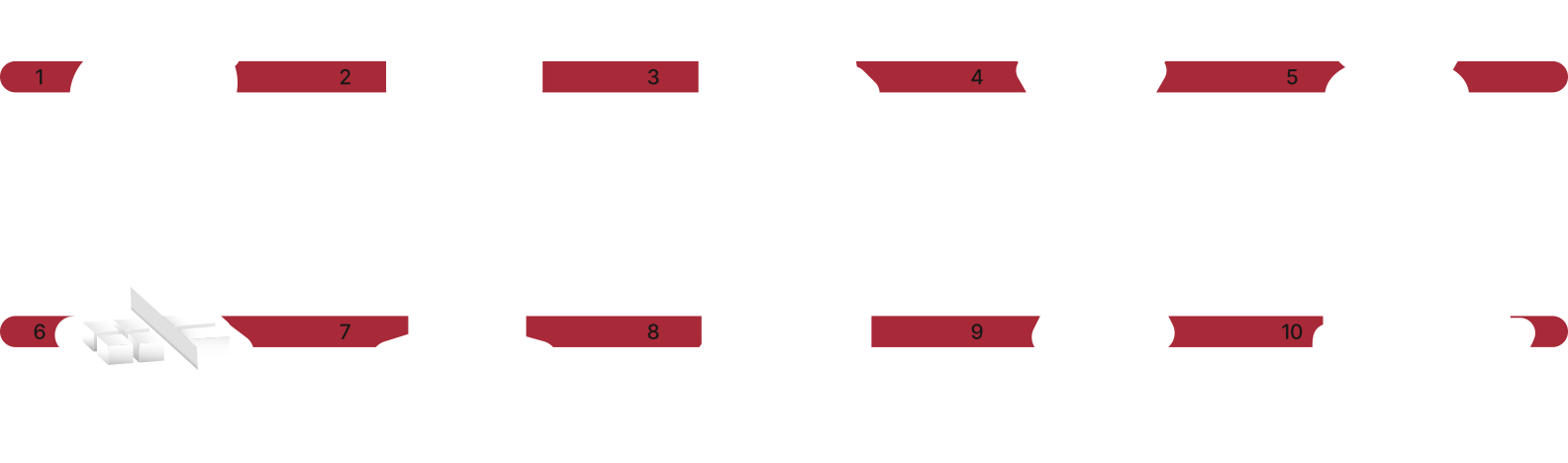
- 1Raw material cleaning
- 2Shell carbonisation
- 3Laboratory testing
- 4Shell grinding
- 5Mixing the components
- 6Forming the charcoal cubes
- 7Drying the finished product
- 8Charcoal testing
- 9Packing, warehousing and storage
- 10Transportation





Strict adherence to the rules at every stage lets us produce the most consistent, high-quality coconut charcoal, with no change in properties from batch to batch.
For COCOLOCO charcoal we use only natural, environmentally clean components of the highest quality:
Coconut shell
It is widely accepted that the best raw material for hookah charcoal grows in Indonesia, yet even within the country shell from different islands differs in its properties. Shell from one island, for example, delivers more heat but produces more ash, while raw material from another island produces less ash but burns through faster. We managed to select the optimal raw material, which gives plenty of heat and smoulders for a long time.
Tapioca
A binder of natural origin extracted from the root of the cassava plant. It is needed so that the charcoal holds its shape. Without this “natural glue” the charcoal would crumble.
Water
It is required at the stage of mixing the charcoal with tapioca to form the cubes. After mixing, the charcoal is dried in special kilns and the water evaporates.
Division by type
Natural
Contains organic raw material only.
Non-natural
Contains inorganic components such as sodium silicates, saltpetre and others.
Division by type of natural raw material
Wood
The oldest type of hookah charcoal. It enjoys steadily high demand in conservative regions such as Turkey and the Emirates, and is barely present in Russia. Every year it loses popularity because it does not release enough heat and because of the foreign odours it gives off while smoking.
Walnut
Produced mainly from walnut shell, with a content of less than 2% of the recipe, combined with coconut shell and/or wood. This type of raw material is used more as a marketing device, and its qualities and properties still fall short of charcoal made from coconut shell.
Coconut
The most popular and sought-after type of charcoal, because coconut shell releases no foreign odours as it burns. COCOLOCO charcoal belongs to this category and is produced exclusively from high-quality coconut shell. Coconut charcoal takes slightly longer to light than wood charcoal, but it also holds heat for longer. On top of that, coconut charcoal releases less carbon monoxide.
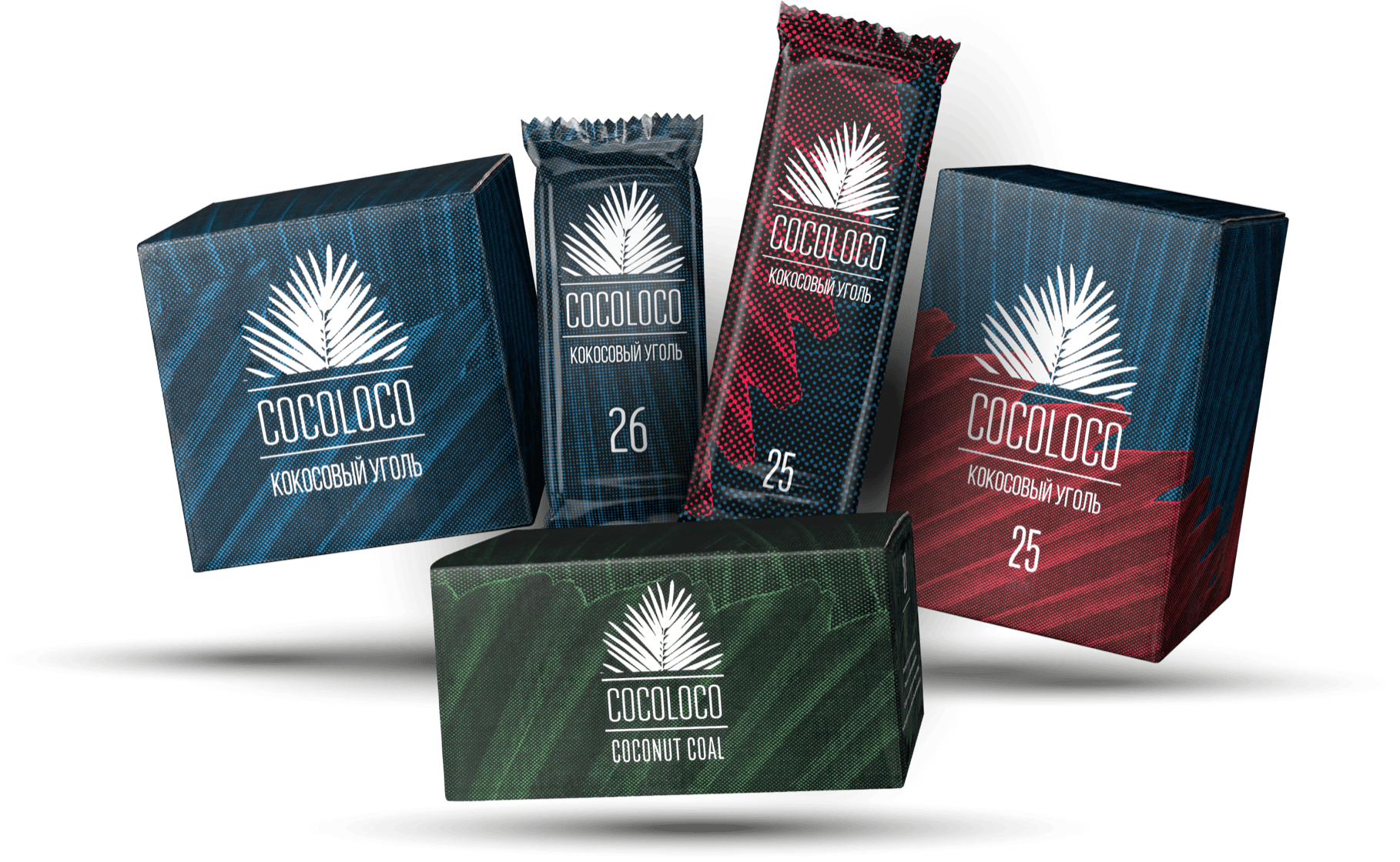
The most widespread form factor of hookah charcoal is the “cube”, available in different sizes — 22, 25, 26 and 27 mm. The optimal choice is charcoal with a 25 or 26 mm edge. The most frequent choice of the Russian buyer is charcoal sized 25×25×25 mm. It is packed in 1 kg boxes (72 cubes) or as briquettes of 10–12 cubes that are convenient to take along.
Sizes 26 and 27 are used when more heat is needed — for heat-resistant tobaccos, for instance, when smoking outdoors or when using fruit instead of a bowl. Beyond that, the larger size has an advantage in convenience: the charcoal needs replacing less often. These formats are most popular in Europe, but they are gaining ground in Russia too. Many consumers note that a single hookah session takes either 4 cubes of 25 mm or 3 cubes of 26 mm, which means the 26 mm form factor is more economical.
The 22 mm form factor is practical to use and fits easily into a heat management device, but its heat is often insufficient because of the increased consumption. This size has lost its relevance, although it can still be found in shops. 22 mm charcoal was in demand in the days of popular hookah blends based on Virginia tobacco, which does not need much heat.
The optimal charcoal size is chosen depending on:
- the type of heat management device (kaloud, foil);
- the smoking location (indoor or outdoor space);
- the features of the hookah blend (heat resistance of the raw material);
- your personal preferences.
How to use charcoal properly
In plain language we explain how to choose the charcoal format, how to work with different heat controllers and hookah blends, how to select the right temperature mode and much more